
Rabbit Feeding And Care – Tips That Apply To Chinchillas And Guinea Pigs
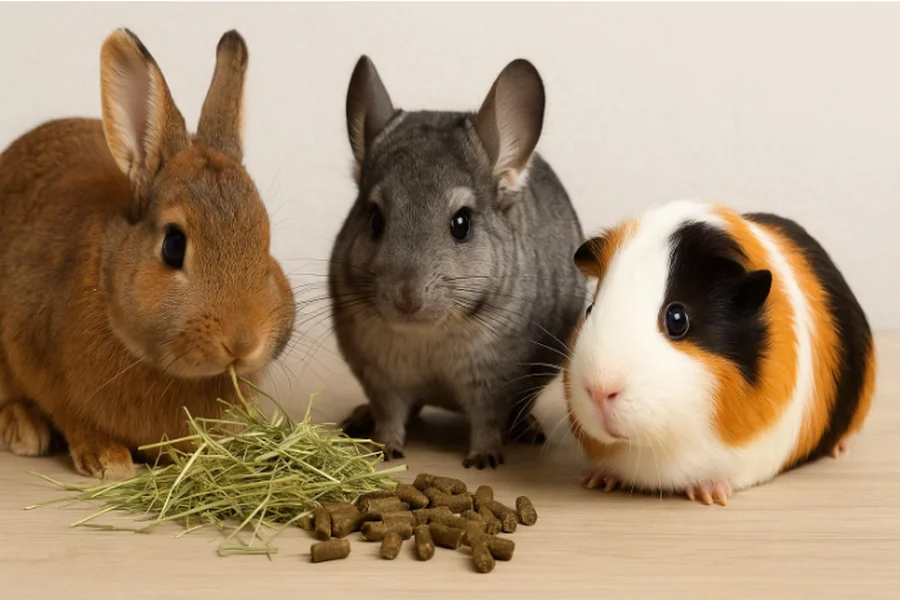
Rabbits, chinchillas, and guinea pigs are among the most popular small pets and for good reason. They are quiet, intelligent, and social animals that form strong bonds with their environment and caregivers. However, raising them properly requires knowledge and attention to detail, particularly when it comes to diet, housing, and overall daily care.
This guide outlines the essential elements for creating a safe, healthy, and enriching life for these gentle companions.
Hay – The Nutritional Core
The single most important component in the rabbit diet, as well as in the diets of chinchillas and guinea pigs, is fresh, high-quality hay. It should make up at least 80% of their daily intake.
- Rabbits and chinchillas require a continuous supply of hay to support digestive function and prevent overgrown teeth.
- Guinea pigs, in addition to these benefits, rely on hay as a natural source of enrichment and fiber.
Timothy hay, orchard grass, and meadow hay are commonly recommended. Hay should be dry, green, and aromatic. Any signs of mold, dust, or browning indicate it is no longer suitable.
Pellets – Supplemental but Specific
While hay is essential, species-specific pellets provide balanced nutrition when chosen correctly. These should be plain (no dried fruits, seeds, or colored additives) and should serve as a supplement, not a replacement for hay.
- Rabbit pellets should be rich in fiber and low in calcium.
- Chinchilla pellets must be formulated specifically for chinchillas, as their digestive system is especially sensitive.
- Guinea pig pellets should include added Vitamin C, since guinea pigs cannot synthesize it on their own.
One of the most widely recommended pellet options for all three species is Beaphar Care+. These pellets are cold-pressed to preserve nutrients, offer a high fiber content, and are tailored to the specific nutritional needs of rabbits, chinchillas, and guinea pigs. They also help with natural tooth wear and support digestive health.
When switching between pellet brands, introduce the new food gradually over a period of 5-7 days to avoid digestive upset.
Fresh Greens – Daily Variety in Moderation
Once fully weaned and adjusted to a pellet-and-hay-based diet, most small animals can enjoy fresh leafy greens.
Suitable greens include:
- Romaine lettuce (not iceberg)
- Cilantro
- Parsley
- Mint
- Dandelion leaves
Greens should be washed thoroughly, introduced one at a time, and monitored for any digestive reactions. Overfeeding greens can lead to soft stools or bloating, particularly in chinchillas.
Fruits and Treats – Rare and Controlled
Many owners are tempted to offer fruits or sweet treats, but these should be used with caution if at all.
- Rabbits and guinea pigs may enjoy a small piece of apple or a slice of strawberry once or twice a week.
- Chinchillas are best kept on a strict hay-and-pellet diet. Even small amounts of fruit or sugar can disrupt their digestion and lead to long-term issues.
Healthier alternatives include small hay cubes or natural herb-based treats with no added sugar.
Water and Hygiene – Non-Negotiable Essentials
Clean, fresh water must be available at all times, ideally in both a bottle and a bowl to suit the animal’s preference. Dishes and bottles should be cleaned daily to prevent bacterial growth.
Equally important is maintaining clean bedding and living quarters. Wet or soiled bedding can lead to respiratory problems and infections, especially in confined enclosures.
Environment and Enrichment
The right environment promotes mental and physical well-being.
- Rabbits need space to hop, stretch, and hide. A large enclosure with a hiding box and daily time outside the cage is ideal.
- Chinchillas benefit from vertical space, platforms, and safe chew toys to support natural behaviors.
- Guinea pigs require horizontal space with hideouts, tunnels, and soft bedding.
Avoid exposure to extreme temperatures, loud noises, or stressful interactions with other pets.
Final Thoughts
Successfully raising rabbits, chinchillas, or guinea pigs requires more than just affection it calls for consistency, informed choices, and respect for each animal’s natural behavior and biological needs. By focusing on a balanced diet rich in hay, quality pellets like Beaphar Care+, fresh greens, clean water, and a safe, enriched environment, small pets can live longer, healthier, and happier lives.
Responsible care begins with knowledge, and the more owners understand, the better these animals can thrive under human care.