
How Big Do Bunnies Get? Rabbit Size & Growth Guide
One of the first things that you may start to think about when you adopt a rabbit is how big your bunny is going to be. Rabbits exist in enormous varieties, and they may also be of different sizes, based on the type of rabbit breed, and also on their genetics and age. Even though there are small rabbits who may remain small and compact all their lives, other rabbits may grow to be very large. This article will uncover the factors that influence the size of the big bunnies, the average sizes of the various breeds of rabbits, and what to expect when the bunny gets big.
Influencing Factors of Rabbit Size
Various dimensions drive the size of a given rabbit and learning which of them are likely to affect the size of your bunny will enable you to predict the growth of your rabbit. The most predictive of the size of your rabbit is breeding. Small breeds will remain small, whereas big breeds will develop large, on their own. It is also genetic since even within the same breed, there are rabbits who are bigger or smaller. It is also important that the diet and health of your rabbit also contribute to giving Your rabbit a healthy diet that is rich in fiber will allow it to grow to its full potential whereas being sick or malnourished will not allow it to grow appropriately.
Breed
The most important factor that influences the size of the rabbit is the extent of the breed. Naturally, there are the small breeds of rabbits and the huggers and heavy breeds. An example of that is that breeds such as the Netherland Dwarf or Holland Lop are small and most are never larger than 4 pounds, whereas larger breeds such as the Flemish Giant or French Lop will grow to 14-15 pounds or even larger. When adopting a rabbit, it is important to get the average size of the breed to ensure that you can make adequate provision to them in terms of their living environment, diet and caring requirements.
Genetics
Genetics is another factor that is highly involved in the determination of rabbit size. Even among similar breeds, there might be more rabbits that are smaller or bigger in terms of family. In case one of the rabbits has a history of having relatively smaller rabbits, or larger rabbits, that can change the way it grows. Nonetheless, overall, the rabbits will not be considered large or small within the normal size range in the breed.
Diet and Health
The development of a rabbit can be influenced by its food and health condition. It is necessary to feed your rabbit with a balanced diet of hay, fresh vegetables, and the right pellets so that they can become all they can be. Something wrong with his diet or his health, such as malnutrition or digestion disorders, can slow growth, but a well-nourished and healthy rabbit will probably grow to the size of his breed.
Age
The first few months of life in young rabbits are the most active in terms of their development. The average rabbits attain their maximum size at around 6 to 12 months of age, depending on the breed. Smaller breeds will become mature faster and bigger breeds may mature until they reach the age of 1 to 1.5 years. After a rabbit attains maturity, its size will not change drastically as long as it is in the adult stage.
Average Size of Common Rabbit Breeds
The rabbits vary in many sizes depending on the breed. These are examples of typical rabbit breeds and their normal ranges of adults:
Small Rabbit Breeds
They have relatively low breeds that measure below 4 pounds. They are very small and also good pets to individuals who do not have space. An example of this would be the Netherland Dwarf which is small and with a round face, and averages 1.1-2.5 pounds. There are other breeds of the smaller types such as the Mini Rex breed and Mini Lop breed which are typically under 4 pounds and would suit well in smaller accommodations such as apartments.
Medium Rabbit Breeds
Rabbits that are of medium size weigh around 4 to 8 pounds. They are very convenient to use since they are not too large to be used but are small enough to fit in most households. The medium-sized rabbits are Breeds such as the English Lop estimated between 6 to 10 pounds, American Chinchilla, which weighs between 6 to 9 pounds. Such rabbits are not that difficult to take care of, yet they demand more space and care in comparison with smaller rabbits.
Large Rabbit Breeds
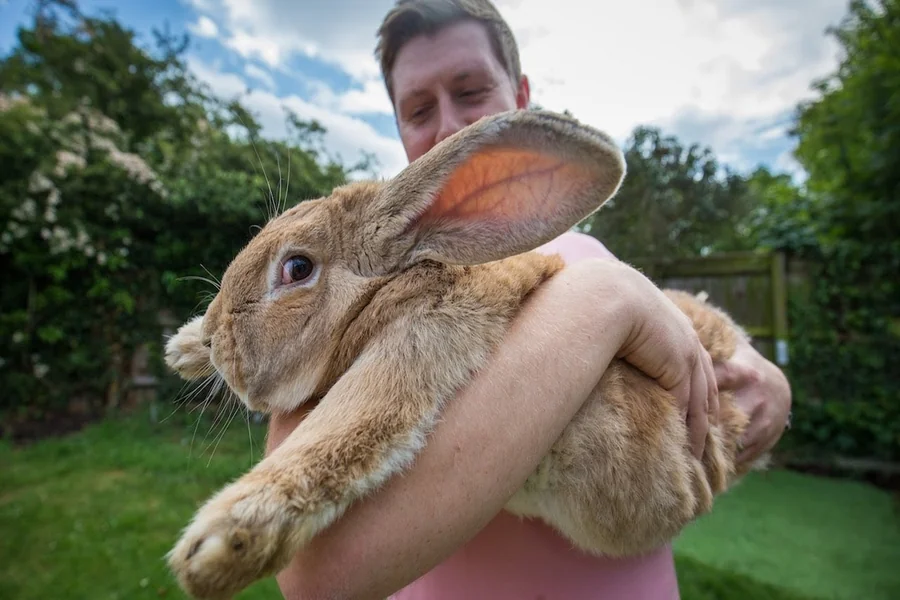
Big rabbits are heavier, with weight of more than 8 pounds and may be surprisingly large to those who own them for the first time. The breeds are tormented with additional space, food and care in order to keep them healthy. Flemish Giant is one of the heaviest breeds of rabbits that can range between 14- 20 pounds and above whereas the French Lop ranges between 9-14 pounds. Medium weights such as the Giant Chinchilla and Checkered Giant are also in the range of 9 12 pounds and are very large in comparison with the average rabbit.
Rabbits Growth and Development
The initial few months of second-year growth of the rabbit are rapid. Rabbits are said to be fully developed when they reach the age of about 6-12 months. Smaller breeds mature faster whereas large breeds could grow until they are approximately 1:1.5 years of age. Rabbits should also be fed well; during their development, they need to consume more nutritious food particularly fiber to keep their bones and muscles strong. They require a lot of fresh hay diets, vegetables and suitable pellets. Moreover, they are supposed to be free enough to move around and exercise, since physical activity is significant to sound development.
Looking after a Rabbit Booklet
The needs of your rabbit change as they grow and you need to adjust the care provided to the rabbit. The following are some of the things to remember:
Space Requirements
Big rabbits will require more space compared to small rabbits. A small rabbit may fit in a hutch or a cage, whereas the size of a large rabbit may be too big to fit, therefore it is important to give him a good home that would allow him to roam freely. You need to also provide your rabbit with time outside of the cage to walk around, run around and have fun in a safe area that is enclosed. The bigger rabbits specifically require space to stretch and feel good in their surroundings.
Diet
Young rabbits are fast growing. And they require a diet full of what is high in fiber, fresh vegetables and high-quality hay. Later on when your rabbit grows, he can still be fed on vegetables. But still his main food should be hay. Remember not to overfeed sweet vegetables or desserts, particularly with large rabbits. And it will cause them to become obese. This is absolutely necessary because you need to keep watch of the weight of your rabbit.
Veterinary Care
Vet checkups are mandatory. You need to get them checked frequently during the growing period of your rabbit. A vet can keep track of the development of your bunny and make sure that he/she is properly developing. Rabbits also tend to have dental and gastrointestinal problems. Hence they should be kept up to date in relation to their health by visiting them frequently.
The genetics and the general care of your rabbit will determine a lot with the size of your rabbit. Smaller sizes, such as the Netherland Dwarf, will not get any larger. But larger breeds, such as the Flemish Giant, may get very large. And require more room to prosper. Irrespective of their size, all rabbits require a balanced diet. An appropriate environment in which to live and exercise in order to remain healthy. In as much as you are looking to adopt a rabbit, it is always wise to do some research. So you can give the rabbit the appropriate care it requires in its lifetime. Under the right circumstances and care, your bunny will become happy and healthy!